Reducing Stuck Fermentation Events Without Rebuilding the Distillery
Stuck or sluggish fermentations do not always require a capital project. In many beverage alcohol distilleries, the faster first move is to review how starch conversion, mash viscosity, fermentability, and enzyme contact are behaving inside the equipment you already run.
Coppercut Catalytics works as a distilling enzyme supplier for spirit production teams that need practical process improvements: steadier fermentability, more predictable run time, better mash handling, and fewer fermentation tanks drifting off schedule.
The objective is not to chase a perfect lab number. The objective is to give plant teams more control over the real operating variables that decide whether fermentation finishes cleanly or ties up capacity.
What a Stuck Fermentation Costs on the Plant Floor
A stuck fermentation is more than a slow tank. It can create a chain reaction across the distillery:
- Delayed tank turns and disrupted production scheduling
- Lower alcohol yield from incomplete sugar utilization
- Higher variability between batches or grain lots
- Increased risk of downstream separation issues
- More operator time spent troubleshooting instead of running
- Pressure to make recipe, temperature, or process changes without a clear root cause
When these events repeat, the question becomes simple: is the fermentation problem starting in the fermenter, or is it being carried in from mash preparation and conversion?
Why Enzyme Programs Matter Before Fermentation Starts
Yeast performance depends on what the mash makes available. If starch breakdown is inconsistent, if dextrin load remains higher than expected, or if mash viscosity limits mixing and transfer, the fermenter receives a less predictable feed.
A tuned enzyme approach can support:
- More consistent liquefaction under real cook conditions
- Improved fermentable sugar availability for yeast
- Lower mash viscosity for easier agitation and movement
- Better access between enzymes, substrate, and water
- Reduced batch-to-batch variation across changing grain quality
- Cleaner handoff from mash preparation into fermentation
This is often the most practical place to start because the enzyme program can be adjusted without rebuilding tanks, piping, cookers, or stillhouse infrastructure.
Common Process Signals Worth Reviewing
If stuck fermentation events are increasing, production managers should look beyond the final fermenter reading and examine the full process path.
Mash Thickness and Transfer Behavior
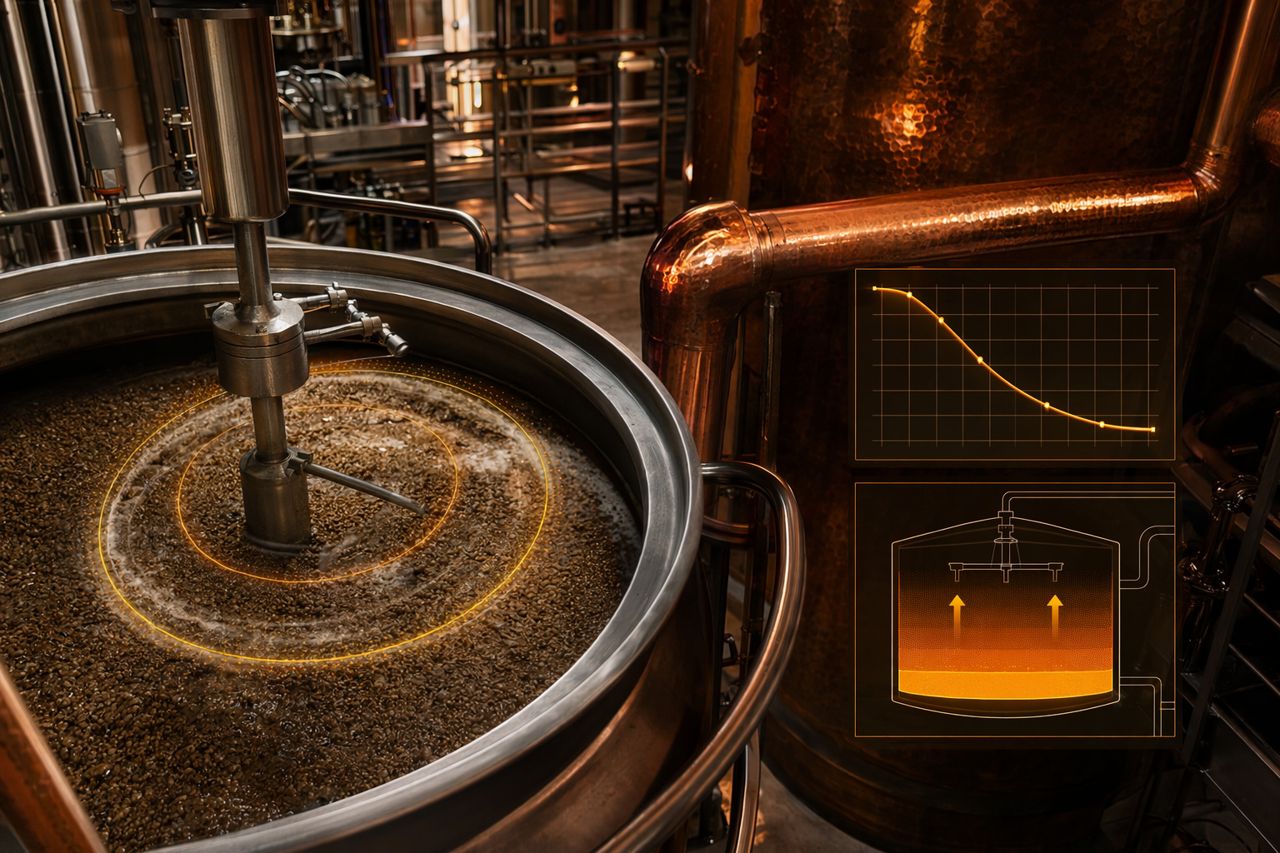
High-viscosity mash can limit mixing efficiency and create uneven conversion zones. If the mash moves poorly, enzyme distribution and heat transfer can suffer before yeast ever sees the substrate.
Residual Dextrin Load
If starch is not converted into a fermentable profile consistently, yeast may run out of usable sugars while unfermented material remains in the system. This can appear as a fermentation issue even when the root cause is upstream conversion.
Heat History
Cook temperature, hold time, cooling rate, and enzyme addition point all influence how well the enzyme program performs in actual plant conditions. Small changes in operating routine can produce large changes in fermentability.
pH Window
Enzymes and yeast both need a process environment that supports their function. A pH drift outside the intended operating window can reduce conversion efficiency and create fermentation instability.
Grain Lot Variation
Corn, wheat, rye, barley, sorghum, and other grain inputs vary in starch accessibility, protein content, fiber, and processing behavior. A fixed enzyme program may not respond well when raw material conditions shift.
Enzyme Levers That Can Reduce Stuck Events
Coppercut Catalytics helps distillery teams assess where the enzyme program should be adjusted for the existing plant configuration.
Liquefaction Support
Liquefaction enzymes help reduce mash viscosity and open starch structures for downstream conversion. Better liquefaction can improve mixing, heat transfer, pumpability, and consistency before saccharification.
Saccharification Support
Saccharification enzymes help convert starch-derived material into fermentable sugars. When tuned to the grain bill and process conditions, they support more complete and predictable fermentation progress.
Viscosity Management
Viscosity-focused enzyme support can improve mash flow, reduce agitation strain, and help create more uniform contact throughout the batch. This can be especially valuable for high-gravity mashes or grain bills with difficult handling characteristics.
Process Compatibility
An enzyme recommendation must fit the plant. Addition point, temperature exposure, hold time, pH range, and operator workflow all matter. The best solution is one the team can run consistently on a production schedule.
A Practical Diagnostic Path
Before assuming a major equipment change is required, review these questions:
- Are stuck events tied to specific grain lots, suppliers, or seasonal raw material changes?
- Has mash viscosity changed at transfer, cooling, or fermentation fill?
- Are cook profiles and enzyme addition points consistent between shifts?
- Does fermentation slow at the same time point, or does the pattern move?
- Are separation issues appearing after the same batches that ferment slowly?
- Has high-gravity operation increased without retuning the enzyme program?
- Are pH and temperature conditions aligned with the intended enzyme window?
The answers usually point toward a small set of process variables that can be tested without disrupting the whole distillery.
What Coppercut Brings to the Review
Coppercut Catalytics is built for production teams that need clear, plant-floor enzyme decisions. We focus on how the enzyme system performs inside your process, not in isolation.
Our support can include:
- Grain bill and process profile review
- Enzyme selection for liquefaction, saccharification, and viscosity control
- Addition point and operating window recommendations
- Practical troubleshooting for recurring stuck or sluggish fermentations
- Quote-ready supply options aligned to production scale
- Guidance for improving consistency without unnecessary process complexity
The right enzyme program should make the fermentation schedule more dependable, not harder to run.
Reduce Stuck Events With the Equipment You Already Have
If stuck fermentation events are costing yield, tank time, or schedule confidence, start with the conversion and viscosity profile feeding the fermenter. A targeted enzyme adjustment may help restore control before larger changes are considered.
Request a quote from Coppercut Catalytics and share your grain bill, mash profile, operating constraints, and production goals. We will help identify an enzyme approach that fits your distillery and supports more consistent fermentation performance.