Fermentation Readiness Before Yeast Pitch | Coppercut Catalytics
A practical pre-pitch checklist for distillery teams managing fermentability, viscosity, consistency, and cleaner downstream separations.
Request pricing A practical pre-pitch checklist for distillery teams managing fermentability, viscosity, consistency, and cleaner downstream separations.
Request pricingIn a beverage alcohol distillery, the yeast pitch is not the starting line. It is the handoff point.
By the time yeast enters the fermenter, the mash has already been shaped by milling, cooking, liquefaction, saccharification, cooling, transfer, and sanitation discipline. If those steps leave behind inconsistent fermentable sugars, excessive viscosity, uneven solids carryover, or temperature drift, yeast performance becomes harder to control.
For production managers, fermentation readiness is a practical checkpoint: is this mash predictable enough to ferment cleanly, on schedule, and with minimal downstream trouble?
As a distilling enzyme supplier for spirit production, Coppercut Catalytics focuses on the process conditions that make that handoff stronger: starch conversion, viscosity control, mash flow, fermentability, and repeatable run behavior.
A fermenter that looks acceptable at fill can still create problems later in the run. Common signs include:
These issues rarely come from one variable alone. They usually come from small gaps across the process: grind, cook temperature profile, enzyme contact time, pH, hold conditions, cooling, and transfer discipline.
The goal before yeast pitch is not perfection. The goal is to reduce avoidable variation before fermentation locks it into the run.
Before yeast enters the tank, production teams should confirm that the mash has moved from cooked grain slurry to a fermentable substrate. In practical terms, that means:
If the mash is still heavy, gummy, or uneven, yeast will be asked to solve a preparation problem. It cannot.
Viscosity affects more than pumpability. It influences heat transfer, mixing efficiency, tank turnover, yeast contact with substrate, and solids behavior.
High-viscosity mash can create practical plant-floor consequences:
Enzyme selection can help production teams manage viscosity earlier in the process. For grain and adjunct systems, liquefaction and viscosity-management enzymes are often used to improve mash handling and create a more predictable substrate before pitch.
Gravity gives useful information, but it does not tell the whole story. A mash can show a workable starting point and still contain a sugar distribution that ferments unevenly.
Before pitch, teams should look at whether the conversion process is producing the fermentability needed for the target spirit production schedule. Questions worth asking include:
For production teams, the key question is simple: will this fermenter behave like the last good one?
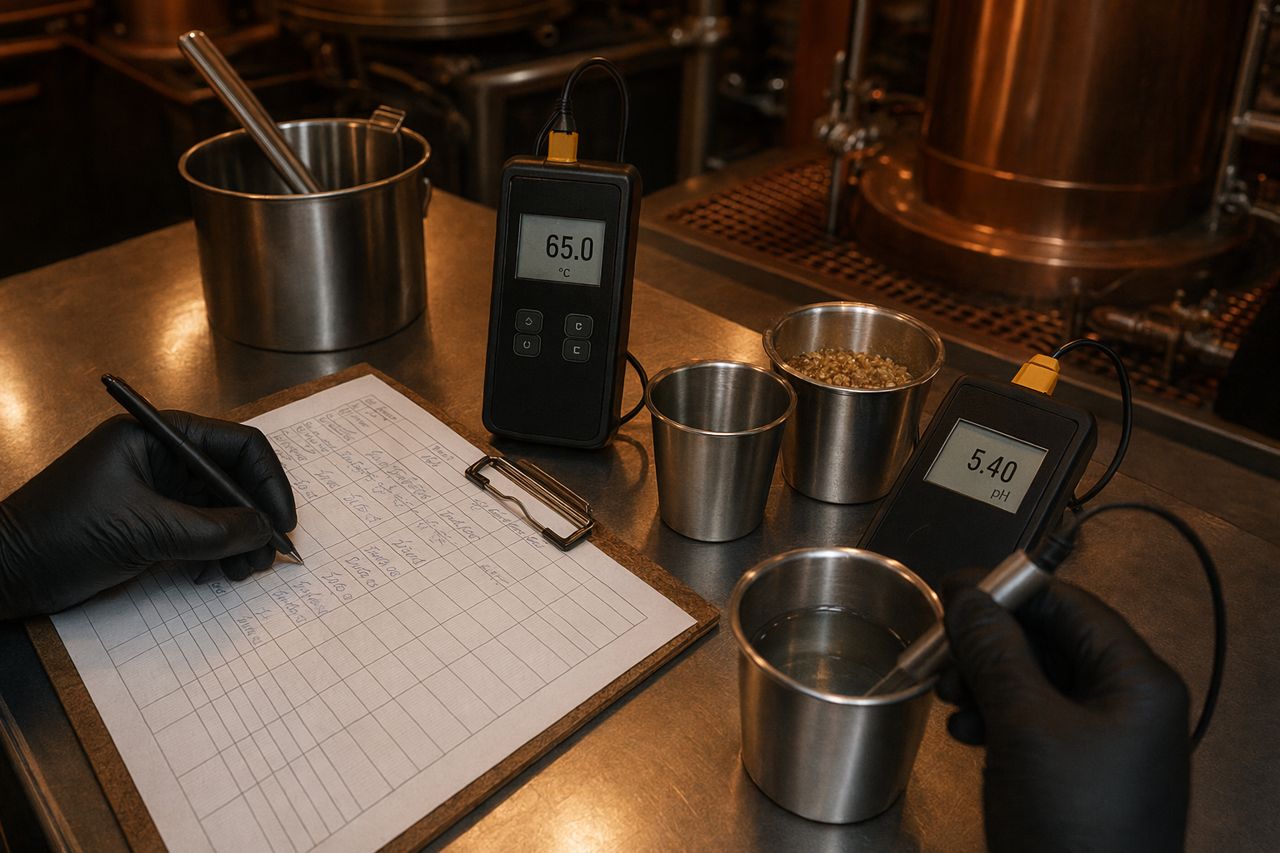
Yeast pitch conditions should be verified at the tank, not assumed from the upstream step. Temperature drift during cooling, transfer, or staged fills can create a weaker start.
Production teams should confirm:
Enzymes and yeast both depend on controlled conditions. If the upstream conversion window was inconsistent, downstream fermentation consistency may already be compromised.
Fermentation readiness is also about what happens after fermentation. Excessive fine solids, poor liquefaction, or uneven mash breakdown can affect beer transfer, still feed behavior, fouling tendency, and separation quality.
Before pitching yeast, look for:
Cleaner separations often begin with better mash preparation. Enzyme strategy can support that by reducing avoidable viscosity and improving substrate consistency before fermentation starts.
Enzymes are not a last-minute correction at pitch. They are process tools used earlier to improve the quality of the substrate entering fermentation.
For spirit production, enzyme programs may support:
The right approach depends on the mash bill, cook system, temperature profile, pH, hold time, backset use, and operational priorities. A corn whiskey plant, malt whiskey distillery, grain neutral spirit operation, and mixed-adjunct facility may each need a different enzyme strategy.
Do not ignore these pre-pitch warning signs:
One abnormal fermenter may be manageable. A pattern means the plant should review upstream conversion conditions, raw material variation, and enzyme fit.
Use these questions in a pre-pitch review:
The strongest fermentation programs connect upstream preparation to downstream performance. That is where enzyme strategy becomes a production tool, not just an ingredient decision.
Coppercut Catalytics works with beverage alcohol producers that need enzyme solutions matched to real plant conditions. We focus on the operational outcomes that matter on the floor:
We do not approach enzyme selection as a catalog exercise. We look at mash bill, cook design, hold conditions, pH, temperature, transfer constraints, fermentation targets, and separation goals.
If your team is seeing slow fermentations, thick mash, inconsistent conversion, or avoidable downstream handling issues, the right enzyme program may help stabilize the process before yeast ever enters the tank.
Tell us what you are running, what you want to improve, and where the process is getting tight. Coppercut Catalytics can help match an enzyme solution to your mash bill, production schedule, and plant-floor constraints.
Tell us your application and volume — we reply with pricing and lead time.