Distillery Expansion Planning: Ingredient, Enzyme, Energy, and Storage Constraints
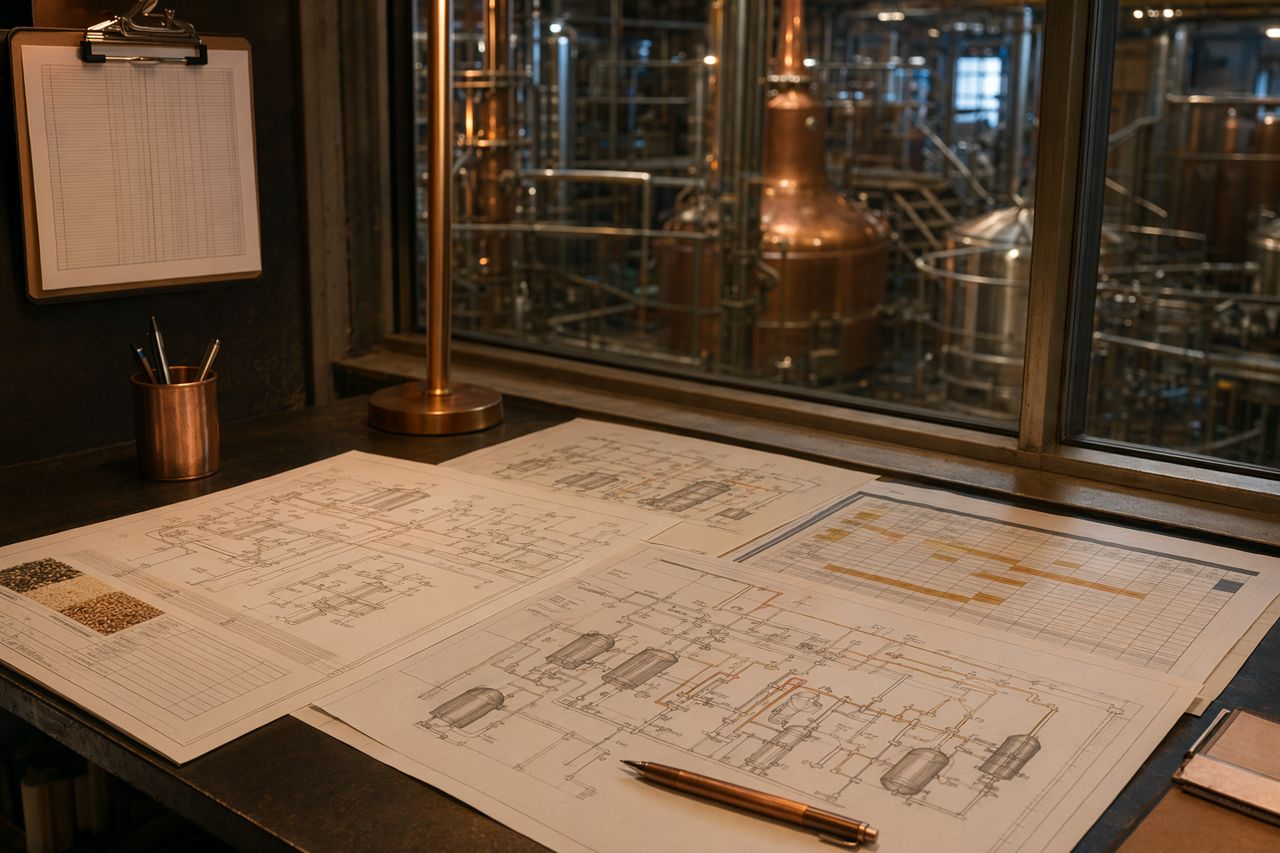
Expansion planning in a beverage alcohol distillery is rarely limited by one piece of equipment. Capacity is usually constrained by the interaction between raw material quality, mash handling, fermentability, heat load, separation behavior, tank turns, and storage availability.
For production managers, the useful question is not simply, “Can we add more capacity?” It is, “Can we add capacity without creating new bottlenecks in viscosity, conversion, fermentation consistency, stillhouse loading, or maturation inventory?”
Coppercut Catalytics works with distilleries that need enzyme programs aligned to real plant-floor constraints. As a distilling enzyme supplier for spirit production, we focus on practical outcomes: more predictable mash behavior, improved fermentability, cleaner liquid-solid handling, steadier run time, and better process repeatability across changing grain or substrate inputs.
Expansion starts with constraints, not nameplate capacity
A new cooker, fermenter, still, or storage vessel can look like the obvious answer. But if upstream and downstream conditions are not balanced, added equipment can expose hidden limitations.
Common expansion constraints include:
- Raw material variability that changes starch availability, viscosity, and solids behavior
- Mash thickness that limits pumping, heat transfer, or mixing efficiency
- Incomplete or inconsistent conversion before fermentation
- Fermentation swings caused by variable sugar profiles or nutrient release
- Longer tank occupancy than the expansion model assumed
- Higher energy demand from thicker mash, slower heat transfer, or inefficient liquefaction
- Distillation variability caused by inconsistent beer composition
- Solids carryover, fouling, or separation issues that reduce operating time
- Barrel, tank, or finished goods storage that cannot absorb the new output profile
The earlier these constraints are mapped, the less likely the expansion is to become a series of reactive fixes.
Ingredient planning: more volume means more variability
Scaling up often changes sourcing. A distillery may add suppliers, widen grain specifications, use different lots, or increase reliance on adjuncts. That can shift process behavior even when the mash bill looks unchanged on paper.
Important ingredient questions include:
- Will starch accessibility stay consistent across expanded grain supply?
- Are beta-glucans, gums, proteins, or fibers likely to increase viscosity?
- Will particle size distribution change with higher milling demand?
- Can the cooking system maintain consistent hydration and gelatinization?
- Will backset, stillage, or process water changes affect mash handling?
In expansion planning, ingredient risk should be treated as a process design variable. Enzymes can help stabilize performance, but the program has to match the substrate, cooking profile, hold time, and downstream handling requirements.
Enzyme strategy: build fermentability and flowability into the plan
Enzyme use should not be an afterthought added once a bottleneck appears. A well-designed enzyme program can support the expansion model by addressing two critical requirements: conversion and movement.
Conversion support
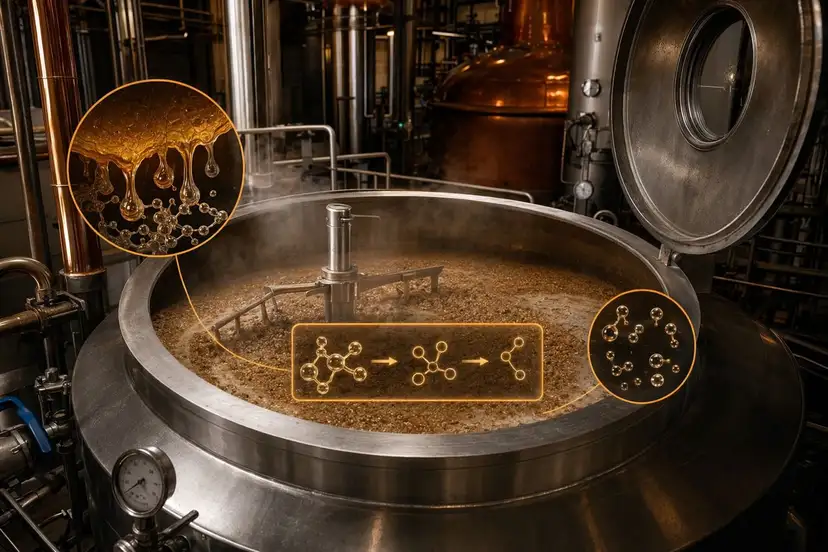
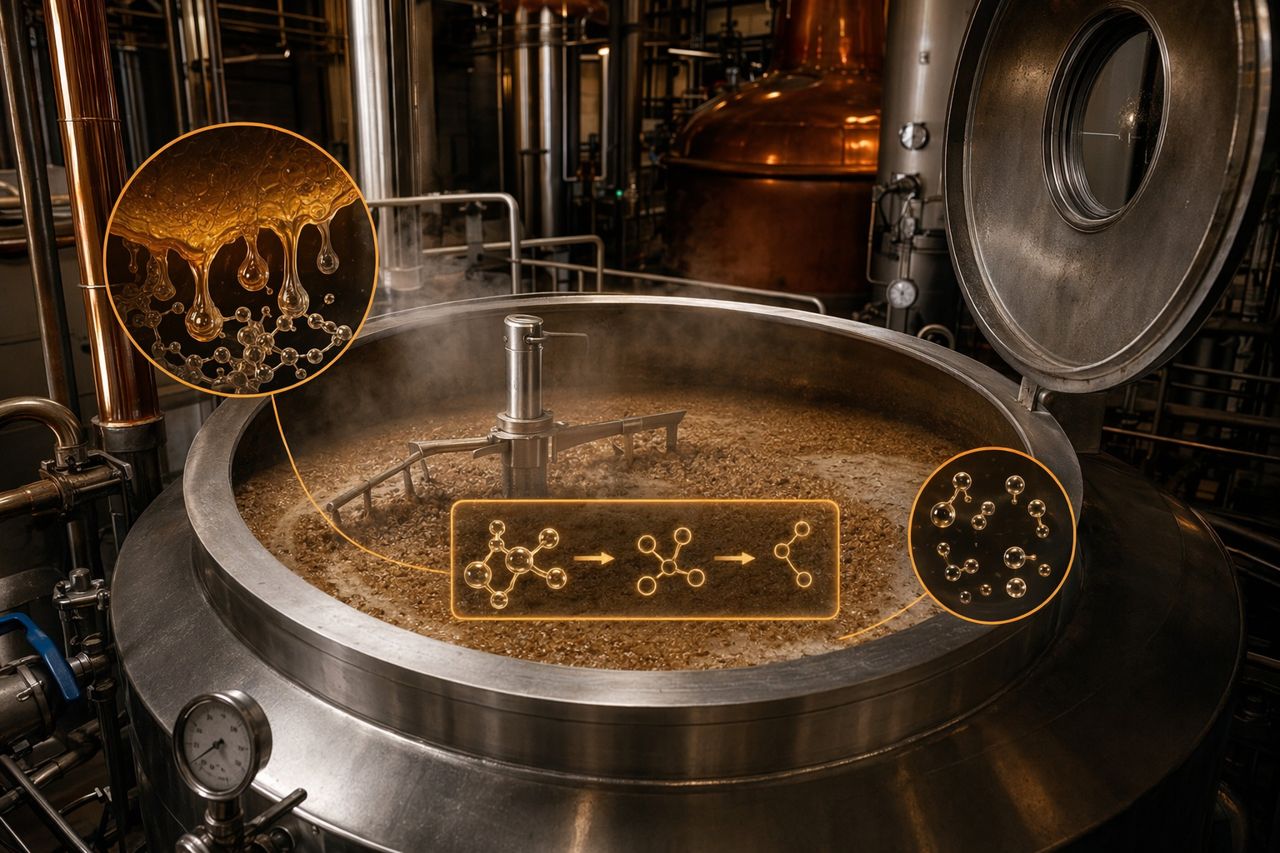
For grain-based spirit production, starch must be made accessible and converted into fermentable sugars in a controlled, repeatable way. If liquefaction or saccharification performance varies, fermentation profiles can drift, tank turns can stretch, and distillation feed can become less predictable.
A practical enzyme plan may support:
- More consistent starch breakdown under defined process conditions
- Improved fermentable sugar availability
- Better repeatability from cook to cook
- Reduced risk of residual starch or incomplete conversion
- More stable fermentation planning across raw material lots
Viscosity and solids management
Expansion often means higher mash loading, more aggressive throughput targets, or tighter equipment scheduling. Viscosity becomes a real capacity constraint when it affects mixing, pumping, heat transfer, filtration, centrifugation, or still feed handling.
Enzyme programs can be designed to help manage:
- Thick mash movement through pumps and heat exchangers
- High-solids handling during cooking and transfer
- Beer consistency entering distillation
- Separation behavior where solids removal is part of the process
- Fouling pressure on downstream equipment
The goal is not simply to add enzymes. The goal is to define where enzyme function protects run time and consistency.
Energy constraints: thick mash can consume capacity before fermentation starts
Energy planning is often based on added equipment load, but mash properties can change the real demand. Higher viscosity can slow heat transfer, increase agitation burden, extend cook steps, and reduce practical throughput.
During expansion planning, evaluate where enzymatic viscosity reduction or starch liquefaction may help reduce process drag. The right program can support smoother heating, easier transfer, and more consistent mash movement, depending on the raw material and process conditions.
Key checks include:
- Cooker fill and discharge behavior
- Agitator load during thick mash periods
- Heat exchanger performance and fouling tendency
- Pumping reliability during peak production
- Time required to reach process targets
- Cleaning frequency tied to mash deposits or solids buildup
Energy savings should be validated against the site’s actual operating conditions, but enzyme strategy can be a meaningful lever in reducing avoidable process resistance.
Fermentation capacity: tank turns depend on consistency
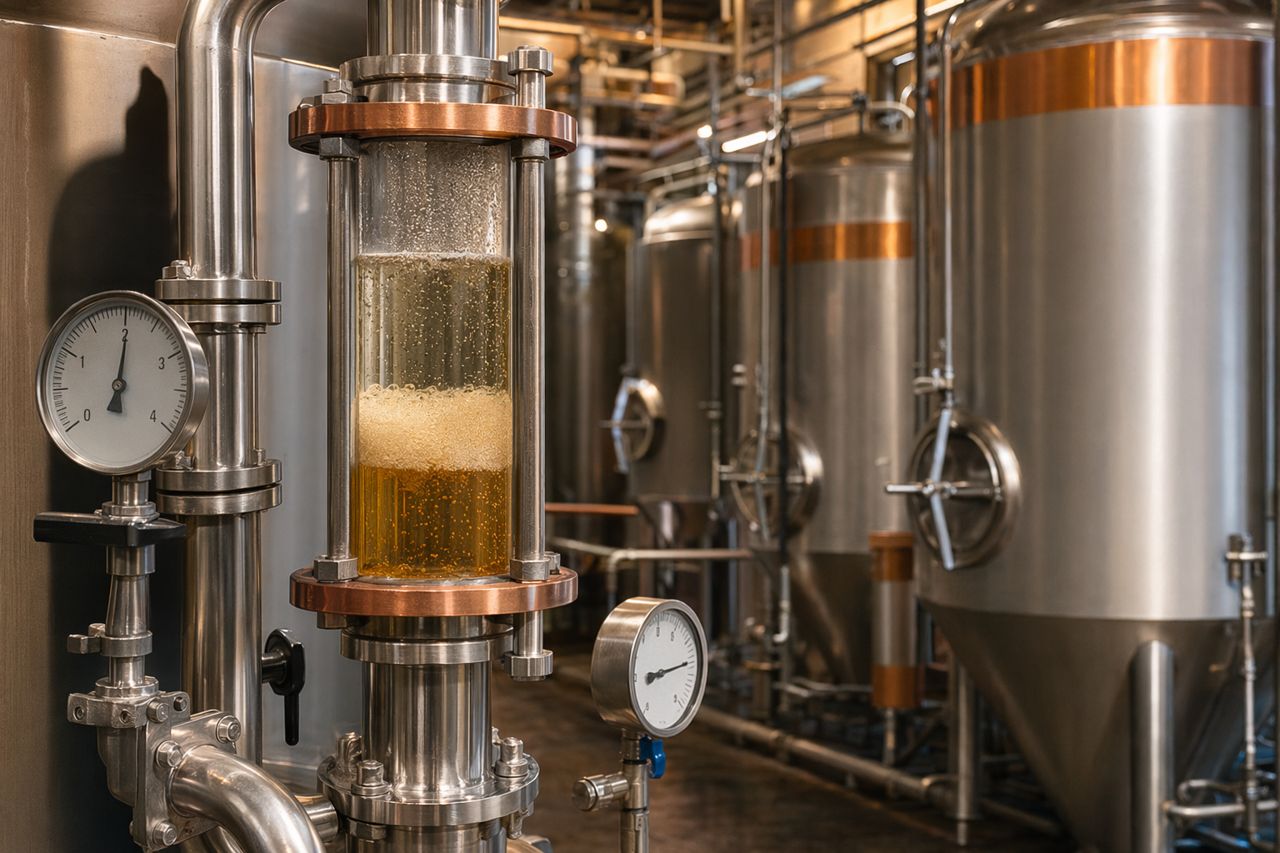
Fermentation capacity is not just the number of tanks multiplied by a planned residence time. In practice, tank availability depends on how consistently each batch reaches its fermentation endpoint and how often off-profile mashes require attention.
Enzyme planning can help support fermentation consistency by improving the reliability of fermentable substrate formation. That matters when expansion depends on tight scheduling and predictable tank release.
Production teams should review:
- Fermentation start consistency across cooked batches
- Sugar profile repeatability
- Attenuation trends by grain lot or substrate source
- Variability in time to target endpoint
- Temperature management under higher production rates
- Cleaning and turnaround requirements between batches
A small shift in average tank occupancy can remove a surprising amount of effective capacity. For expansion, fermentation stability is a capacity protection issue.
Distillation and separation: feed consistency protects stillhouse rhythm
The stillhouse is sensitive to upstream variability. Beer composition, solids level, viscosity, and residual carbohydrates can influence heat input, foaming tendency, fouling, and cut consistency.
An enzyme program cannot replace good stillhouse control, but it can help make the feed stream more predictable. That supports steadier operation and cleaner separation decisions.
Consider enzyme impact on:
- Beer viscosity entering the still
- Solids behavior and carryover risk
- Residual starch or dextrin presence
- Foaming pressure during heat-up
- Cleaning frequency driven by deposits
- Run-to-run consistency of feed composition
For an expanding plant, the stillhouse should not be forced to absorb variability that could have been reduced upstream.
Storage constraints: production volume must have somewhere to go
Storage is often the quiet constraint. Higher fermentation and distillation capacity only creates value if intermediate and finished streams can be stored, matured, blended, or moved according to the production plan.
Expansion teams should model storage for:
- Fermenter-to-still timing
- Low wine, high wine, or intermediate tank availability
- Barrel filling or bulk storage requirements
- Cleaning windows and tank segregation
- Product scheduling across different recipes
- Finished goods movement and quality hold points
Enzyme planning does not solve storage limitations directly, but it helps make upstream output more predictable. Predictable output makes storage planning more realistic.
A practical expansion checklist for enzyme planning
Before finalizing the expansion model, review these items with your technical and operations teams:
- Raw material range: Define expected grain, adjunct, or substrate variability after expansion.
- Mash viscosity risk: Identify where thick mash limits mixing, pumping, heating, or transfer.
- Conversion requirements: Map where starch breakdown and fermentable sugar formation must be controlled.
- Process windows: Confirm temperature, pH, hold time, and addition points that the plant can reliably maintain.
- Fermentation timing: Evaluate whether sugar profile consistency supports planned tank turns.
- Stillhouse feed quality: Review solids, viscosity, and residual carbohydrate risks entering distillation.
- Separation performance: Check filtration, centrifugation, or solids handling where applicable.
- Cleaning impact: Estimate whether fouling and deposits could reduce effective operating time.
- Storage synchronization: Align production rhythm with intermediate and finished inventory capacity.
- Trial plan: Validate enzyme fit under site-relevant conditions before locking in assumptions.
What Coppercut Catalytics brings to the planning table
Coppercut Catalytics supplies enzyme solutions for beverage alcohol distilleries that need grounded, production-aware support. We help teams evaluate enzyme fit in the context of real constraints: substrate quality, mash handling, conversion goals, fermentation rhythm, stillhouse feed consistency, and operating schedule.
Our approach is practical:
- Understand the process conditions and bottlenecks first
- Recommend enzyme functionality based on plant objectives
- Support trial planning around measurable process outcomes
- Help production teams compare performance across raw material lots
- Focus on consistency, throughput protection, and cleaner separations
If your expansion plan depends on better mash movement, more reliable fermentability, or steadier stillhouse feed, enzyme strategy belongs in the planning conversation early.
Request a quote
Planning an expansion or debottlenecking an existing distillery line? Share your substrate, process goals, and current constraint points through the on-site request a quote form. Coppercut Catalytics will help identify an enzyme approach aligned with your production targets and operating conditions.